
From Indefinite Gloom To Definite Bloom
Escaping Zombification

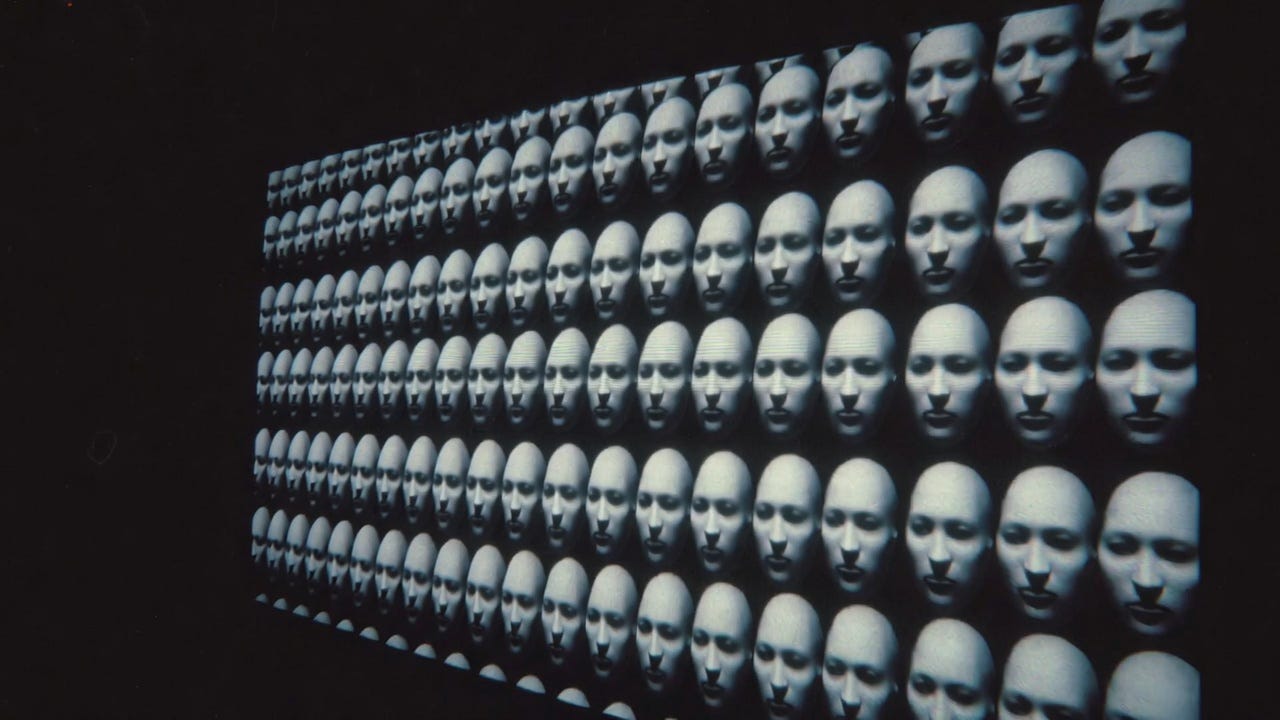
It may sound hyperbolic to declare the death of “the online,” yet I believe its golden era crested in 2021. What followed was not an abrupt collapse but a gradual slide to zombieland. One accelerated by saturation, regulatory strangulation, and the sheer exhaustion of low-hanging novelty.
As a crypto investor who’s watched mostly ruin and fleeting conquest since then, I may be biased. But the pattern is hard to ignore: the frontier that once rewarded audacity is now unable to produce any.
The online once was the ultimate playground for innovation. Code cost almost nothing to ship, barriers could be smashed before the regulators even noticed, and the ambitious flocked there as the natural Schelling point for enacting change.
That (relative) Wild West started closing around 2016, when Trump’s victory was loudly proclaimed the first election won online. Governments and regulators pounced fast. From then on, the creep of controls over speech, platforms, and digital power accelerated the transformation of the open terrain into a minefield.
The killing stroke was amplified by generative AI. Content creation costs cratered to zero in a world where distribution was already free. The floodgates opened, not to enlightenment, but to slopification: mass-produced content for content’s sake.
Drowning in an endless soap-opera feed every minute of the day is now understood as “staying informed”. LLMs widened the gap between life and knowledge into a chasm. Sloplification led to zombification.
Crypto, on the other hand, still carries a shadow of an ambition because it’s disobedient by design. It forges new coordination mechanisms, challenges creaking institutions, by enabling dissent. That’s how society creates progress. My belief is that the most transformative technologies enable dissent (e.g. printing press, internet).
But lately the vision of crypto got captured by purely financial engineering, attracting regulatory scrutiny that successfully co-opted and tamed the original, more revolutionary impulse by trapping it within the existing financial and political machine.
The online hit its peak in the deliriously indefinite-optimistic Web3 mania of 2021 that remained niche relative to what came after. Then GPT slop rolled in, and utopia curdled into a zombie dystopia of Citrin’s vision.
How To Bloom
The online seems more like indefinite pessimism than ever: let’s entertain ourselves until the end comes in the drama of the endless conflict porn, infinite optimization loops, and zero-sum attention wars. Building in the world of online is not as impactful as it once was.
Meanwhile, the opportunity is slowly returning to the world of atoms. This isn’t just a pivot to hard tech like manufacturing, energy, and defense; it includes the resurgence of localism, domestic supply chains, reshoring, and the human-scale economy that was hollowed out by decades of digital abstraction.
Political volatility in recent years rammed home a brutal truth: physical security underpins everything. The ground we thought was solid turned out to be quicksand, and people noticed.
I like to frame this pivot optimistically: from indefinite doom to definite bloom. The catalysts are straightforward. Online saturation of regulation, slop, and novelty burnout has made digital feel like a dead end. You might be able to spin clawdbot to make better spreadsheets but the fact that fixing your leaking sink costs $500 and two week wait does remind you post-scarcity is a pipe dream.
Purpose-driven builders are peeling away from B2B SaaS treadmills, AI hype trains, and perpetual financial engineering. Finance is inherently indefinite, money stops being a means and becomes the end itself. Crypto fell into that same trap, and it repels those who want to enact tangible change rather than shuffle digits in a casino.
I don’t want to go as far as saying that the future is a rejection of the digital. It’s a re-engineering, as the definite bloom will require a better, more secure digital layer focused not on distraction, but on the security and resilience of the physical: from industrial control software to a secure, credibly neutral financial system.
On The Pendulum
New political realities have shattered the fantasy of endless, unquestioned globalization. Cracks appeared after the 2008 financial crisis, widened with Brexit and Trump in 2016, and split open under COVID’s revelation of bureaucratic brittleness and authoritarian reflexes. Alternative truths bypassed legacy gatekeepers, forcing governments into clumsy coercion.
Then 2022’s war on Europe’s doorstep imposed cold realpolitik on leaders who’d mistaken weakness for moral superiority. The re-election of Donald Trump served as a jolt to the system.
Globalization couldn’t coast forever: its narrative fractured, and too many weren’t better off. Innovation had frozen in atoms, diverted into financial gadgets and digital escapism while real industries atrophied. The global view always favors top-down and centralized, but bottom-up and decentralized will proliferate in the near future.
That long neglect now begs reinvention, radical upgrades to infrastructure, production, resilience, and security. Suddenly, outbuilding the competition in the physical world matters again. Decades of neglect in the physical world: the infrastructure, industry, supply chains, and hard security have left gaping opportunities for builders with drive and desire to enact change.
Technology sets society’s invisible rules, as inexorable as physics. The online reshaped them as radically as the printing press did. Gutenberg unleashed Luther and centuries of epistemological bloodshed; today’s digital substrate has ignited its own crisis of authority and truth. Only now it targets the state, not the church. We live in the times of epistemological battle not dissimilar to the 16th and 17th century.
The online has done its disruptive work. The real battlefield is shifting to atoms: clear rules, hard scarcities, human fears and limits. Although I do not believe in scarcity of human ingenuity the political regimes calculate with what is not what might be. That realism is lighting the fuse on an arms race: economic, technological, and geopolitical.
I don’t buy inevitability. Doom is not a given and a hot war isn’t destined to take place. McLuhan wrote that “there is absolutely no inevitability as long as there is a willingness to contemplate what is happening.” Throw in cheap, scalable fusion or some other black-swan breakthrough, and the whole script flips
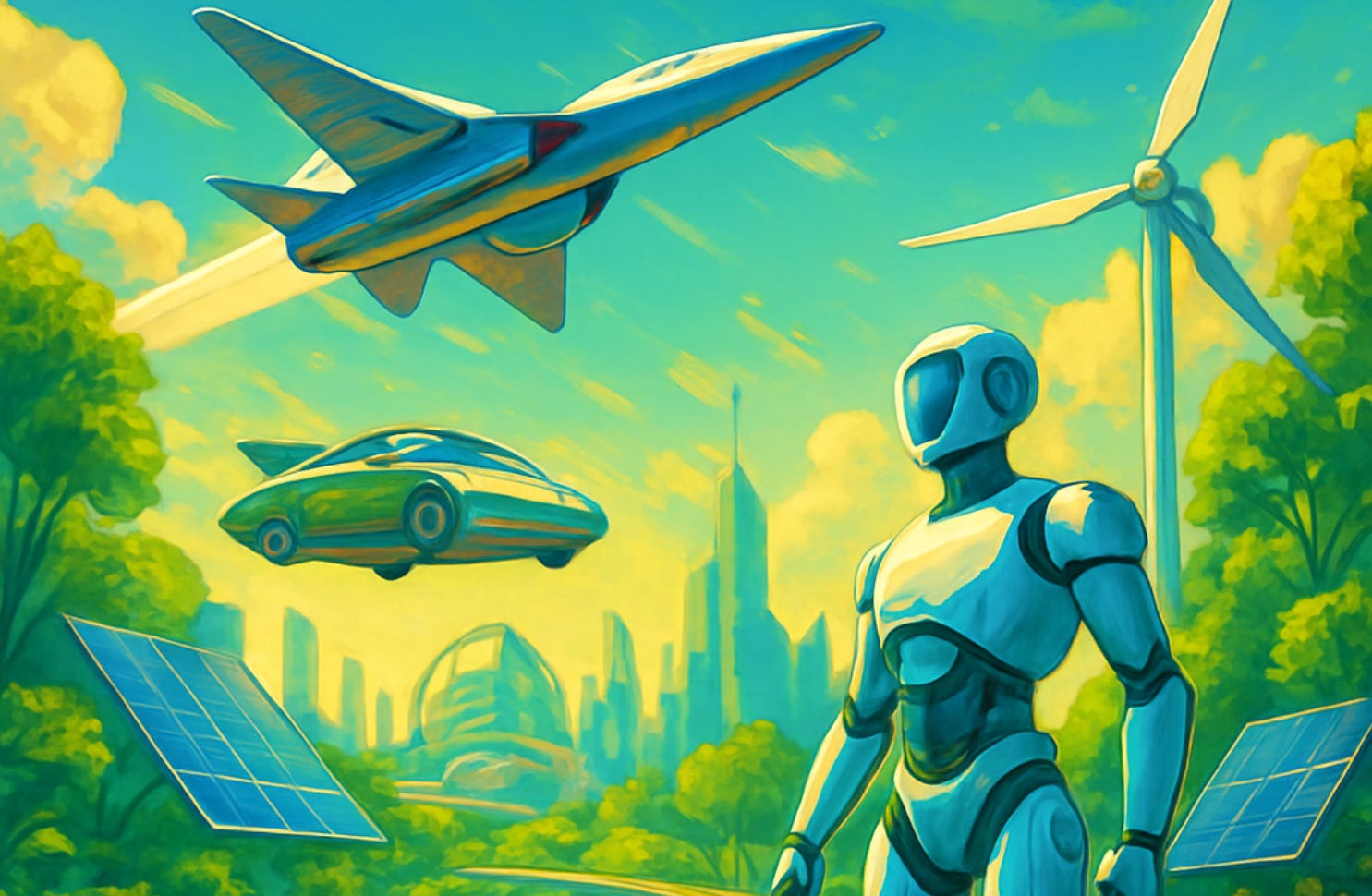
The Founders Fund quip of “we wanted flying cars, instead we got 140 characters” perfectly nailed the peak online. The pendulum is swinging back. The posterboys of SpaceX, Anduril, and the next wave of atom-builders are the vanguard. This could only be the beginning.
The above might have been an overomanticized narrative as the future of innovation will not be frictionless. The world of atoms is not the same open-source, low-capital playgrounds that the internet once was. The new frontier of atoms has a much higher barrier to entry.
The hidden battle entrepreneurs will fight is in ensuring that the ambition to build and innovate in the physical world remains open to ambitions of individuals and does not remain a privilege of those that come with an aura of (institutional) pre-importance.
This pivot to the physical world, while vital, presents its own high-stakes battlefield: access and belief that it can be achieved.
nice one